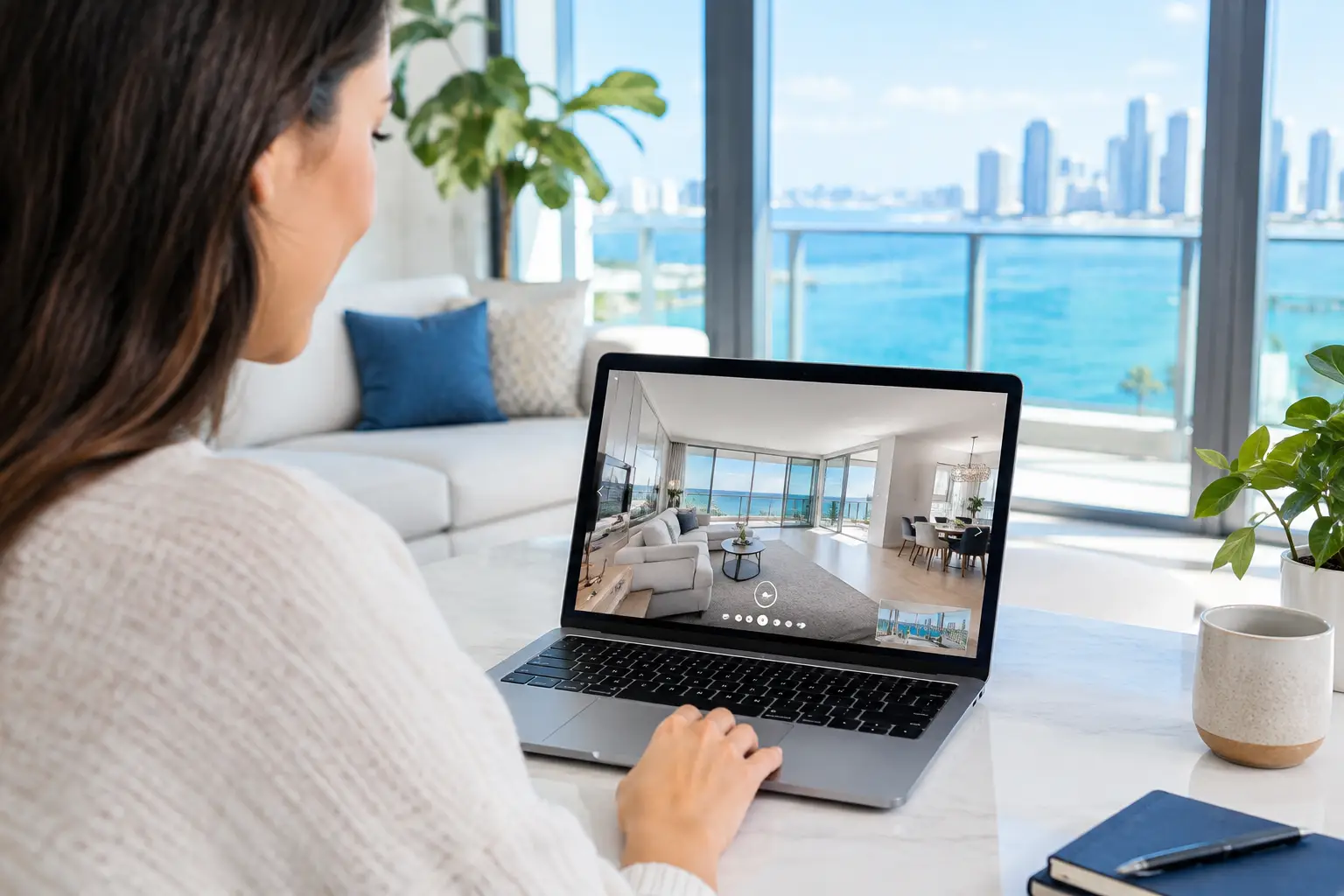
Virtual Home Tours for Smarter Miami Moves
A waterfront view can look extraordinary in a listing photo yet feel very different when you see where the sun falls in the afternoon, how the balcony connects to the living room, or what sits beyond the neighboring tower. That is where virtual home tours add real value. For Miami buyers, renters, and investors who want to narrow their options efficiently, a well-produced tour offers a more honest first look at a property than still images alone.
For local clients, virtual tours save time. For relocating and international clients, they create a practical starting point for understanding a home, condo, or new development before arranging travel or an in-person showing. They do not replace professional representation or a physical visit when possible, but they make each next step more informed.
What Virtual Home Tours Show Better Than Photos
Photography is designed to create impact. A virtual tour is designed to create context. As you move from room to room, you can better understand the floor plan, traffic flow, ceiling height, natural light, and the relationship between indoor and outdoor living areas.
That distinction matters in South Florida, where lifestyle details often influence a decision as much as the bedroom count. A buyer considering a Brickell condominium may want to see whether the primary suite is truly separated from the entertaining area. A renter comparing Miami Beach residences may care more about the balcony depth and water view than a formal dining room. In Coconut Grove or Coral Gables, the connection between the kitchen, terrace, pool area, and yard can be central to how a home will actually be used.
Virtual tours can also reveal details that polished photos may minimize: a narrow entry, an awkward hallway, limited closet space, a low floor with nearby sightlines, or a view partially framed by another building. These are not necessarily deal-breakers. They are the details that help a client ask better questions before investing time in a showing.
How to Evaluate Virtual Home Tours Like a Buyer
The most useful approach is to watch a tour with a purpose. Rather than simply deciding whether a property feels attractive, evaluate whether it fits your daily routine, privacy preferences, and long-term goals.
Start with the arrival experience. In a condominium, look at the lobby, elevator access, corridors, and unit entry if they are included. In a single-family home, consider the street presence, driveway, gates, landscaping, and approach to the front door. These moments shape both day-to-day enjoyment and guest experience.
Then focus on proportion. A wide-angle lens can make rooms appear larger than they feel, so use familiar reference points such as doors, kitchen islands, beds, and dining tables to judge scale. Notice whether the living area accommodates the furniture arrangement you envision and whether bedrooms offer realistic space for more than a bed.
Pay close attention to windows and outdoor areas. Miami living often centers on light, views, terraces, and access to the water or surrounding neighborhood. A tour can help you see whether a balcony is suitable for dining, whether a terrace is accessible from multiple rooms, and whether the view is open, angled, or more limited than the listing description suggests.
Finally, consider what is not shown. If the tour avoids a bathroom, utility room, closet, building amenity, or exterior elevation, ask why and request additional visuals. A quality tour should support transparency, not just presentation.
Questions Worth Asking After the Tour
After viewing a property virtually, a short conversation with your agent can clarify what the camera cannot answer. Ask about the unit’s orientation, the typical level of street or neighboring-building activity, monthly association fees, rental policies, parking, storage, and any included furnishings or upgrades.
For a pre-construction residence, ask which elements are representative renderings and which are confirmed selections. Model residences can communicate a developer’s vision, but finishes, views, layouts, and completion timing should always be reviewed carefully against the applicable contract documents.
Why Virtual Tours Matter for Miami Relocation
Relocating to Miami is rarely just a property search. It is a decision about work routines, school access, waterfront living, walkability, dining, recreation, and the pace of a particular neighborhood. Virtual tours help clients compare those lifestyle variables before they arrive.
A professional relocating for a role in Downtown Miami may prioritize a condo with a practical commute, a polished lobby, and dedicated workspace. A family may prefer the residential character, outdoor space, and neighborhood feel of Coral Gables or Coconut Grove. An investor may be assessing how a residence presents to a future tenant, from the quality of amenities to the usability of the layout.
In each case, video walkthroughs and virtual tours make it easier to create a focused shortlist. That means an in-person visit, if needed, can be spent evaluating the right properties rather than touring every appealing photo online.
There is a trade-off, however. A virtual experience cannot fully communicate ambient sound, elevator wait times, building maintenance standards, scent, neighborhood activity, or the precise feeling of a view at different times of day. It is an excellent filter, not a substitute for due diligence.
Using Virtual Home Tours to Sell or Rent a Property
For sellers and landlords, virtual home tours can help a listing attract more qualified interest. Buyers and renters who have already reviewed the layout are less likely to schedule a showing with unrealistic expectations. The result is often a more productive conversation when they do visit.
The strongest tours feel clear and well-paced rather than overly staged. They should show the property’s key differentiators, whether that is a Biscayne Bay view, a private rooftop, a renovated chef’s kitchen, a spacious terrace, or access to notable building amenities. They should also reflect the home accurately.
Preparation still matters. Declutter surfaces, open shades where views and light are assets, remove personal items, and make sure every room has a purpose. A spare room presented as a vague storage area can look like a limitation; shown as an office, nursery, or fitness space, it helps prospects picture the home’s flexibility.
For luxury residences, presentation should extend beyond the unit when appropriate. A well-framed look at the lobby, pool deck, waterfront, fitness center, or private beach access can reinforce the lifestyle buyers expect from a premium South Florida property.
When a Live Virtual Showing Is the Better Choice
A prerecorded tour is useful because it is available on demand. A live virtual showing is more valuable when a client has narrowed the field and wants answers in real time. An agent can revisit a closet, pan slowly across a view, open cabinets, show the condition of a finish, or compare the scale of two rooms on request.
Live tours are especially helpful for out-of-state and international clients with limited travel windows. They also work well for rental searches, where timing can be decisive and an applicant may need to assess a property before arriving in South Florida.
At Miami Best Property, virtual exploration can support the early stages of a search while local brokerage guidance brings the important context behind each residence. The best decisions come from combining visual access with knowledgeable advice on the building, neighborhood, pricing, and terms.
Make the First Viewing Count
A virtual tour should leave you with a sharper point of view, not just a list of attractive rooms. Save the properties that align with your needs, write down the questions the tour raises, and compare each home against the lifestyle you want to build in Miami.
When a residence continues to stand out after a closer virtual look, it has earned the next step: a focused conversation, a live walkthrough, or an in-person showing arranged around what matters most to you.