
Coral Gables versus Coconut Grove for Homebuyers
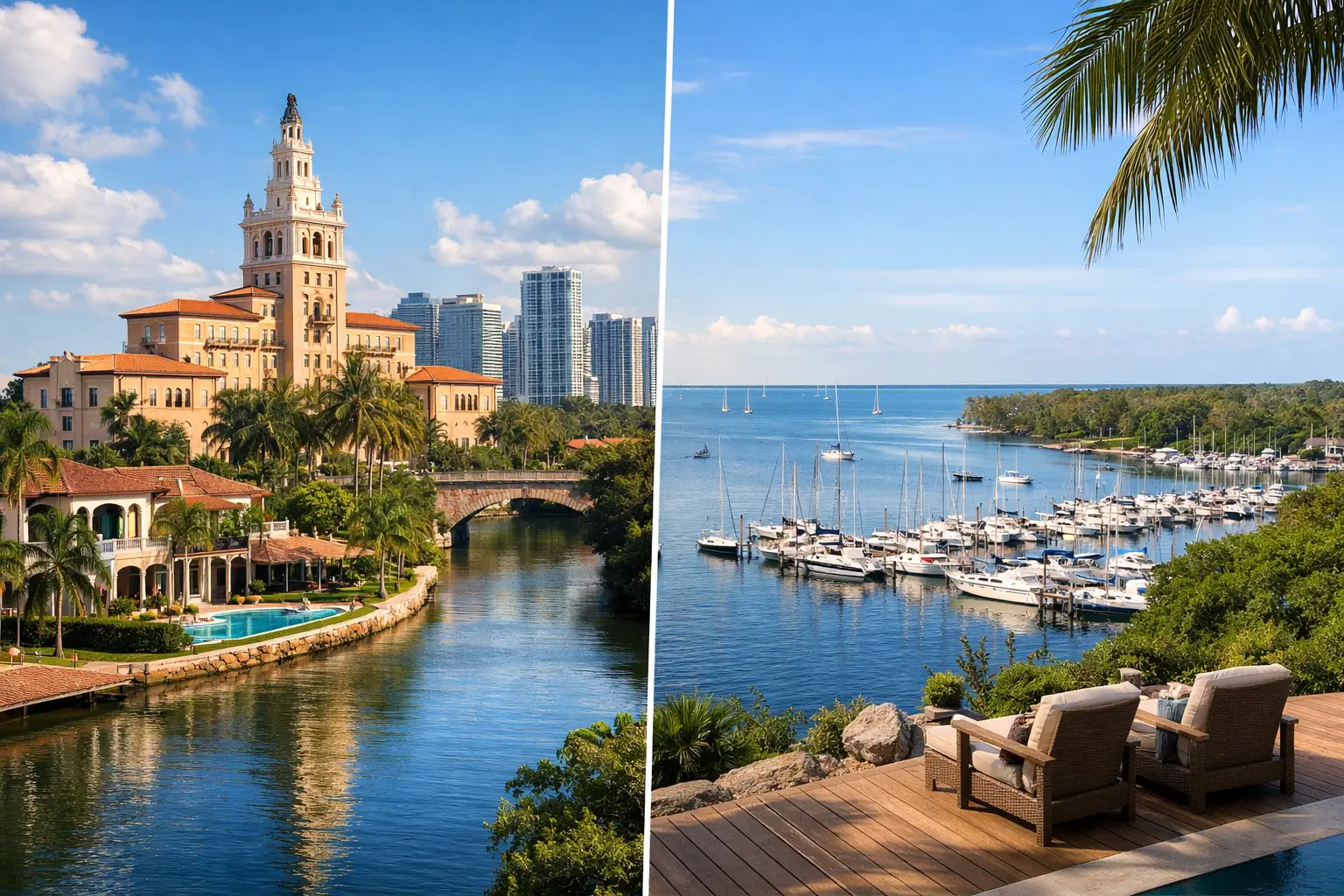
A morning in Coral Gables might begin beneath a banyan-lined street near the Biltmore, followed by coffee on Miracle Mile. In Coconut Grove, it may start with a walk toward Biscayne Bay, where sailboats, mature trees, and village storefronts set the pace. The Coral Gables versus Coconut Grove decision is not simply about choosing two of Miami’s most desirable addresses. It is about choosing the version of Miami you want to come home to.
Both neighborhoods offer established character, exceptional residential appeal, and proximity to key Miami destinations. Yet they feel distinctly different in their architecture, street life, housing mix, and day-to-day rhythm. For buyers, renters, and investors, the better fit depends on how lifestyle priorities align with the property itself.
Coral Gables versus Coconut Grove: The Essential Difference
Coral Gables is more formal, planned, and architecturally cohesive. Known as The City Beautiful, it has broad landscaped avenues, Mediterranean Revival residences, country-club-adjacent living, and a polished commercial core along Miracle Mile. Many buyers are drawn to its sense of order, privacy, and enduring prestige.
Coconut Grove feels more relaxed and organic. Its appeal comes from lush tropical landscaping, a waterfront presence, historic cottages, and a walkable village atmosphere centered around CocoWalk, restaurants, marinas, and parks. The Grove can feel tucked away while remaining close to Brickell, Downtown Miami, and Key Biscayne.
Neither is universally better. Coral Gables often appeals to buyers seeking a traditional, refined residential setting and a more structured neighborhood layout. Coconut Grove often speaks to those who prioritize greenery, bay access, an artistic sensibility, and a more casual luxury lifestyle.
Homes, Condos, and Architectural Character
The housing stock is one of the clearest differences between these neighborhoods. Coral Gables offers a wide range of single-family homes, from historic Mediterranean estates and Old Spanish residences to contemporary new construction. Buyers can also find luxury condominiums near Miracle Mile, the University of Miami area, and along the neighborhood’s central corridors.
For those considering a home in Coral Gables, location within the city matters. A property near the Granada Golf Course, for example, offers a different experience from a waterfront estate in Gables Estates or a residence closer to South Miami. Lot size, renovation history, flood considerations, and proximity to preferred amenities can significantly influence both value and lifestyle.
Coconut Grove also delivers exceptional single-family homes, although its architectural mix is more varied. Historic wood-frame cottages, mid-century homes, elevated contemporary residences, and bayfront estates can sit within the same broader area. Mature tree canopies and winding streets give many properties a private, tropical feeling that is difficult to replicate elsewhere in Miami.
The Grove has also become a major destination for boutique luxury condominiums. These residences tend to emphasize design, indoor-outdoor living, and proximity to the waterfront or village core. For a buyer who wants a lock-and-leave residence without giving up neighborhood character, a well-positioned Coconut Grove condo can be especially compelling.
Daily Lifestyle and Walkability
Coral Gables offers a polished routine. Residents have access to respected dining, galleries, boutiques, golf, and cultural venues, often within a setting that feels composed rather than hurried. Miracle Mile and Giralda Plaza provide an active dining and shopping district, while residential streets become notably quieter just a few blocks away.
Coconut Grove has a more spontaneous feel. Weekend plans might include a waterfront lunch, time at Peacock Park, a marina visit, or a stroll through the village. Its restaurant scene is lively without feeling disconnected from the neighborhood, and the bayfront setting creates a strong outdoor-living identity.
Walkability depends heavily on the specific address in either neighborhood. A condo near Coconut Grove’s village center may make daily errands easy on foot, while a home farther inland may require driving. In Coral Gables, a residence near Miracle Mile offers a more walkable experience than properties in the larger estate sections. Buyers should evaluate their actual routines rather than rely on a neighborhood-wide impression.
For Families and Long-Term Residents
Both areas are popular with families and established professionals because they offer a residential atmosphere without sacrificing access to Miami’s business and cultural centers. Coral Gables is often favored by buyers who value larger traditional homes, established streetscapes, and proximity to private and public educational options. School assignments and enrollment policies should always be verified directly, particularly when they are central to a purchase decision.
Coconut Grove can be an excellent fit for families who want access to parks, outdoor activities, and a more relaxed neighborhood energy. Its mix of homes and newer luxury residences also gives buyers more ways to enter the market, although opportunities vary widely by location and condition.
Commute, Access, and Convenience
For professionals commuting to Brickell or Downtown Miami, Coconut Grove can offer a practical advantage depending on the property location and travel time. The neighborhood also provides convenient access to Key Biscayne, which is valuable for residents who regularly enjoy its beaches, clubs, and recreational amenities.
Coral Gables is well positioned for those connected to the University of Miami, Miami International Airport, South Miami, and major business corridors. Its central location can work particularly well for buyers whose professional and personal lives extend across different parts of Miami-Dade County.
Traffic patterns are variable, and a map rarely captures the full experience. Test a prospective commute at the times you expect to travel. The route from a waterfront Grove property may feel very different from one near US-1, just as a Coral Gables address near major avenues may offer a different level of access than a secluded estate street.
Value, Inventory, and Investment Considerations
Coral Gables and Coconut Grove are both limited-supply markets with substantial long-term appeal. In each neighborhood, homes with architectural distinction, renovation quality, meaningful outdoor space, and desirable micro-locations typically command attention. Waterfront access, dock potential, views, and proximity to village or retail districts can further shape pricing.
Coral Gables may appeal to buyers focused on legacy ownership. Its recognizable architecture, civic identity, and established estate neighborhoods support a market that often rewards properties with timeless design and careful maintenance. For investors, the depth of demand from end users is an important part of the neighborhood’s appeal.
Coconut Grove attracts buyers who value scarcity of a different kind: a waterfront-oriented, heavily landscaped environment close to Miami’s urban core. New luxury development can create opportunities for buyers seeking modern finishes and amenity-rich living, while distinctive single-family homes remain highly sought after.
The right investment approach depends on intended use. A primary residence, a seasonal home, a luxury rental, and a pre-construction purchase require different evaluation criteria. Maintenance costs, homeowners association terms, rental rules, insurance requirements, and renovation potential should be assessed before comparing headline prices alone.
Which Neighborhood Fits Your Priorities?
Choose Coral Gables if you are drawn to classic architecture, a more formal residential atmosphere, broad avenues, and a well-defined city identity. It is particularly attractive for buyers seeking estate homes, refined dining and shopping, golf-adjacent living, or a central location with a traditional Miami character.
Choose Coconut Grove if your ideal Miami home includes tropical landscaping, an easy connection to the bay, village walkability, and a less structured feel. It is a strong match for buyers who want contemporary luxury, boating proximity, outdoor recreation, or a neighborhood that blends historic charm with modern design.
The most productive next step is to tour both neighborhoods with a clear brief: preferred property type, commute needs, desired walkability, budget range, and plans for the next five to ten years. Miami Best Property can help narrow the search to homes, condos, rentals, and pre-construction opportunities that match how you intend to live, not just where you want to be seen.
A well-chosen address in either Coral Gables or Coconut Grove can deliver an exceptional Miami lifestyle. Let the street, the home, and the rhythm of a typical Tuesday guide the decision as much as the view on a perfect Sunday.
Pingback: Construction Loan Financing for Miami Buyers - miamibestproperty.com
Pingback: Miami Inspection Guide for Buyers and Sellers - miamibestproperty.com
Pingback: Miami Property Outlook for Buyers and Sellers - miamibestproperty.com
Pingback: South Florida Relocation Guide for Miami Living - miamibestproperty.com