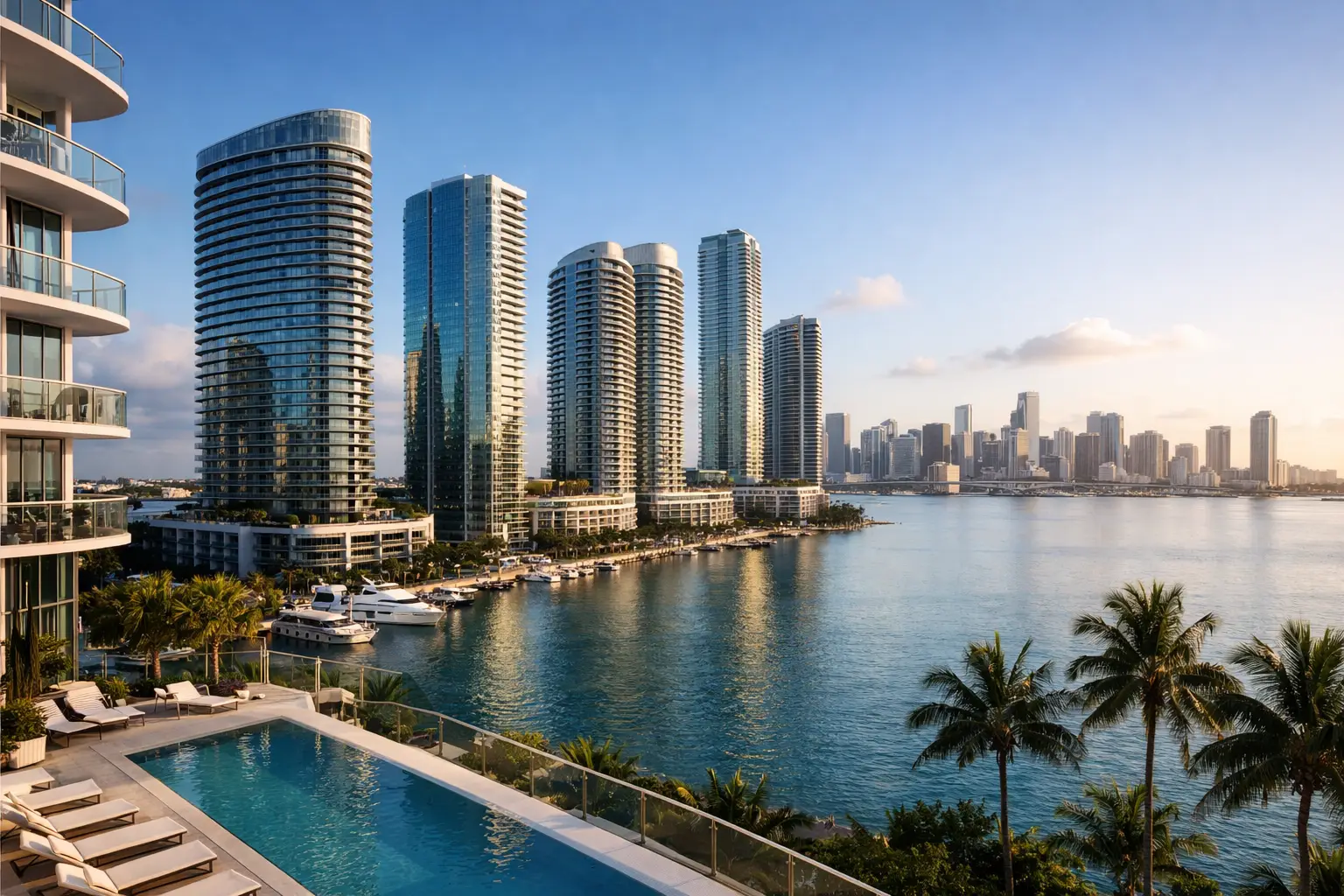
Top Miami Condos for Investors Worth Watching
A Miami condo can be a lifestyle asset, a rental-income vehicle, or a long-term hold with meaningful appreciation potential. The top Miami condos for investors are not simply the newest towers or the most recognizable addresses. They are the properties where location, building operations, rental rules, carrying costs, and buyer demand work together.
For an investor, the best opportunity rarely comes from a single headline number. A unit with a lower purchase price may carry high association fees or restrictive lease rules. A luxury residence with a premium entry price may attract a deeper resale audience, better seasonal demand, and a more durable position in the market. The right choice depends on the investment strategy from day one.
What Makes a Miami Condo Investable?
Miami offers several distinct condo markets within a relatively compact area. Brickell attracts professionals and international buyers who value walkability, waterfront views, and proximity to major business and dining destinations. Downtown Miami appeals to buyers who want urban access, cultural amenities, and connection to the expanding city core. Edgewater provides bayfront living with a more residential feel, while Miami Beach, Sunny Isles Beach, and Key Biscayne serve buyers seeking a resort-oriented coastal lifestyle.
An investable building usually has a clear audience. That audience might be a corporate tenant looking for a furnished Brickell residence, a second-home buyer seeking a managed beachfront property, or a long-term resident drawn to Coconut Grove’s village character. When a building tries to appeal to everyone, its rental and resale story can become less predictable. Properties with a defined market position are often easier to evaluate.
The building itself matters as much as the individual residence. Professional management, well-maintained common areas, appropriate reserves, responsive security, and a strong owner profile can support both tenant satisfaction and resale confidence. Investors should look beyond a dramatic lobby or rooftop pool and ask how the condominium operates on an ordinary weekday.
Top Miami Condos for Investors by Strategy
Brickell for executive rentals and urban demand
Brickell remains a leading choice for investors focused on long-term leases, executive rentals, and liquid resale demand. Newer, full-service buildings close to Brickell City Centre, Mary Brickell Village, and the waterfront often appeal to relocating professionals, finance and technology employees, and buyers who want a polished pied-a-terre.
Buildings such as Brickell Flatiron, Reach and Rise at Brickell City Centre, and Echo Brickell are frequently considered by buyers seeking high-end finishes, strong amenity packages, and a central location. Each has a different ownership profile and rental policy, which should be reviewed before making an offer. The goal is not to buy the best-known name alone, but to identify the unit type with the strongest demand – usually a well-laid-out one- or two-bedroom residence with a compelling view, parking, and a functional floor plan.
Brickell can be especially effective for an investor who values stable demand over a purely vacation-driven model. It may be less suitable for buyers whose strategy depends on unrestricted short-term rentals, since many luxury condominiums set minimum lease terms and limit rental frequency.
Downtown Miami for flexibility and access
Downtown Miami has evolved into a compelling investor market for buyers who want access to business districts, cultural venues, transportation, and the waterfront. The area attracts a mix of residents, including professionals, students, medical workers, and buyers seeking an urban second home.
Buildings with a clear rental-friendly structure can be attractive here, particularly when they offer modern amenities and convenient access to transit. Investors should distinguish between established residential towers and projects designed with more flexible use in mind. Flexible rental policies can expand income options, but they may also create more operational work, more variable occupancy, and a different resale audience than a traditional luxury residence.
A carefully selected Downtown condo can offer a practical entry point into central Miami. Unit condition is important. A recently renovated residence or a newer construction unit may compete more effectively than a dated apartment in a building with similar views.
Edgewater for bayfront value and residential appeal
Edgewater is a natural fit for investors who want waterfront exposure without the pace and density of Brickell. The neighborhood’s bay views, proximity to Midtown and the Design District, and access to downtown make it appealing to full-time residents and long-term tenants.
Elysee, Aria on the Bay, and Biscayne Beach represent the type of full-service bayfront properties that draw investor interest. These buildings offer a luxury residential experience, and that matters when targeting tenants who are choosing Miami for more than convenience. They want a home with amenity spaces, water views, and easy access to dining, shopping, and the cultural energy of nearby neighborhoods.
In Edgewater, view orientation can have a major effect on both rent and resale. A higher-floor bay-facing unit may justify a meaningful premium, while an interior or obstructed-view residence needs to be priced with discipline. Investors should compare units within the same building, not just across neighborhood averages.
Sunny Isles Beach and Miami Beach for lifestyle-led demand
Sunny Isles Beach and Miami Beach appeal to investors who prioritize a coastal setting and a global second-home audience. Condos in these markets can command attention because the lifestyle is difficult to replicate: direct beach access, oceanfront amenities, resort-caliber service, and proximity to luxury retail and dining.
At the higher end, branded and ultra-luxury residences can provide a distinctive market position. Examples include Porsche Design Tower, Armani Casa, and select oceanfront buildings in Miami Beach. These are not necessarily yield-first investments. Purchase prices, monthly fees, insurance costs, and furnishing standards can be substantial. Their value often lies in scarcity, service, and a buyer pool that values a branded coastal residence.
For investors pursuing this segment, the strongest units tend to have direct water views, generous terraces, and layouts suited to both personal use and upscale rentals. A lower-priced unit with a compromised view may not deliver the same exit potential, even if the building name is identical.
Pre-Construction Can Create a Different Entry Point
Pre-construction condominiums deserve separate consideration because they involve a different timeline and risk profile. Investors may benefit from phased deposit structures, early selection of preferred layouts, and the opportunity to own in a new building before completion. New development can also attract buyers who value contemporary design, current building systems, and fresh amenities.
However, a pre-construction purchase should be evaluated as a long-term commitment rather than a quick transaction. Review the developer’s track record, the proposed association budget, anticipated rental rules, delivery schedule, and the competitive supply expected when the project opens. A beautiful sales gallery is only the beginning of the analysis.
In areas such as Brickell, Downtown Miami, Edgewater, and North Bay Village, new projects may offer compelling options for investors who can wait for delivery. The best fit depends on whether the future building fills a real gap in the market or enters a segment already crowded with similar residences.
The Numbers That Matter Beyond Purchase Price
A sound condo investment analysis begins with projected rent, but it should not end there. Association fees, property taxes, insurance, management, furnishing, maintenance, vacancy, and leasing costs all affect net performance. In a luxury building, premium amenities can support rental appeal while also increasing monthly ownership costs. That trade-off must be measured, not assumed.
Investors should also review the condominium’s financial health. Request association documents, budgets, reserve information, meeting minutes, pending assessments, rental restrictions, pet policies, and move-in procedures. Florida condominium requirements and building maintenance needs have made this review particularly valuable. A buyer should understand both the unit and the community’s financial obligations before removing contingencies.
Financing can change the equation as well. Some buildings have buyer profiles, rental ratios, or approval standards that affect lending options. International buyers and cash purchasers may have more flexibility, but they still benefit from a clear ownership-cost model and a deliberate resale plan.
How to Choose the Right Unit Within the Right Building
Once a building has been identified, the individual unit becomes the decision. Floor height, exposure, view corridor, parking, balcony depth, bedroom count, and renovation quality can create a material difference in tenant demand. In many Miami towers, a two-bedroom with a usable den or a one-bedroom with an exceptional view can outperform a larger but less functional layout.
Avoid assuming that the largest unit is automatically the best investment. Larger residences may attract a more limited tenant pool and carry higher monthly expenses. Conversely, compact units can lease quickly but may face more direct competition. The strongest choice is usually the residence that fits the building’s core renter or buyer profile.
Miami Best Property can help investors compare current inventory, pre-construction opportunities, building policies, and neighborhood-level demand before narrowing the search. A focused review can prevent an attractive listing from becoming an expensive mismatch.
The most successful Miami condo investments begin with a precise definition of success: dependable rental income, personal use with long-term upside, a future primary residence, or a luxury asset in a globally recognized destination. Choose the building and unit that serve that purpose clearly, then let the Miami lifestyle strengthen the investment case.