Miami Pre Construction Condos: What to Know
Buying early in a new development can feel like getting the first pick of Miami living – before the building has fully taken shape, before the best lines are gone, and sometimes before prices move higher. That is why miami pre construction condos continue to attract everyone from end users to international buyers and long-term investors. The appeal is real, but so is the need for clear guidance on timing, deposits, developer terms, and neighborhood fit.
Why Miami pre construction condos attract so much attention
Pre-construction gives buyers access to something resale inventory cannot always deliver: a brand-new residence, current design standards, modern amenities, and the chance to reserve a unit in a project that reflects where the market is heading rather than where it has been. In neighborhoods such as Brickell, Edgewater, Downtown Miami, and Sunny Isles Beach, that future-facing appeal matters.
For many buyers, the first draw is selection. Early buyers often have the widest choice of floor plans, views, exposure, and stack positions. If your priority is sunrise water views, a lower-maintenance one-bedroom, or a larger residence with a den for hybrid work, buying before sellout can create options that may not exist later.
There is also the pricing conversation. Pre-construction is not automatically a discount play, and that is where buyers need a more informed perspective. Some launches begin with attractive early pricing to build momentum. Others come out strong from day one because the location, branding, and amenity package support premium positioning. Value depends on the project, the delivery timeline, and how well the building fits future demand.
How the buying process works
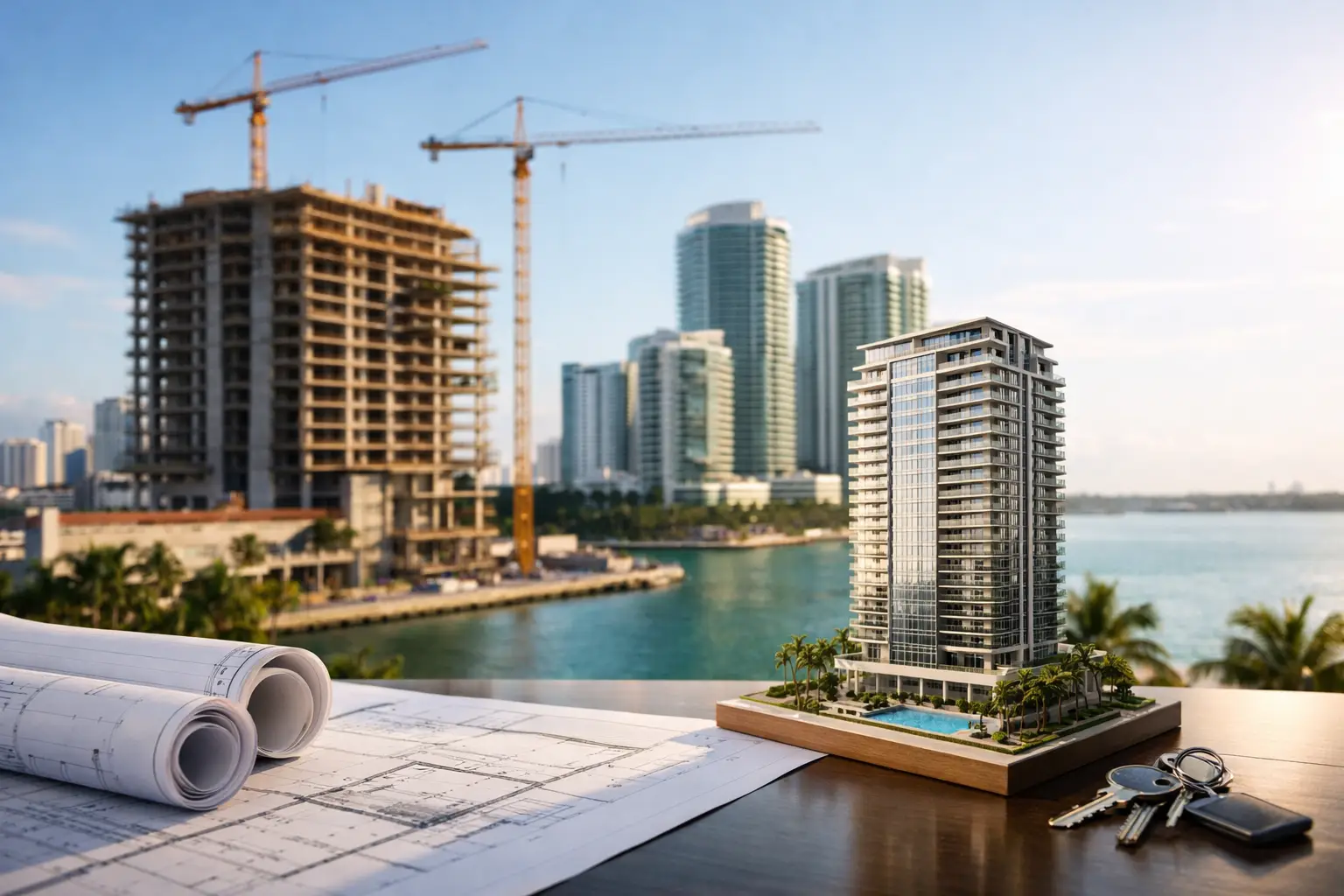
With miami pre construction condos, the process usually starts with a reservation or purchase agreement tied to a specific unit. Buyers review floor plans, finishes, projected completion dates, deposit schedules, and condominium documents. Unlike a typical resale purchase, you are often making a decision based on renderings, model residences, and the developer’s track record rather than a finished home you can walk through.
That shifts the due diligence. In resale, you focus heavily on the current condition of the unit and comparable sales. In pre-construction, your attention moves toward the developer, the legal structure of the contract, the building’s planned features, and the long-term desirability of the location.
Deposit structures vary, but they are typically paid in phases over the construction period. That can be attractive for buyers who want to secure a unit now while spreading capital commitments over time. At the same time, it requires discipline. You need to be comfortable with the payment schedule and the expected completion window, which can change based on permitting, construction progress, and market conditions.
The real advantages – and the trade-offs
The strongest reason to consider pre-construction is control. You may be able to choose the residence that best matches your lifestyle goals, whether that means a bayfront exposure, a flexible layout, or a building with a stronger wellness and hospitality focus. New developments also tend to align with how buyers live now, with better amenity programming, more polished common spaces, and technology integrated into the ownership experience.
For investors, there can be upside in securing a property before completion and entering the market with a new asset at delivery. For primary and second-home buyers, there is the appeal of contemporary finishes, lower near-term maintenance concerns, and a fresh residential experience in one of South Florida’s most sought-after markets.
Still, pre-construction is not the right move for everyone. The wait can be substantial. A buyer who needs to move in quickly is usually better served by resale or move-in-ready new inventory. Floor plans can read differently in person than they do on paper. Views may be impressive in marketing materials but should be evaluated carefully against future nearby development. And while developers work from detailed plans, finishes, dimensions, and timelines may involve permitted variations under the contract.
That is why expectations matter as much as enthusiasm. The buyers who tend to have the best experience are the ones who understand both the opportunity and the structure of the transaction.
What to evaluate before reserving a unit
Location still leads the conversation. In Miami, not all new development value is created equally. A building in Brickell may appeal to professionals who want walkability and a strong luxury condo ecosystem. Edgewater may stand out for bay views and proximity to the Design District, Wynwood, and Midtown Miami. Coconut Grove and Coral Gables speak to buyers who want a more established residential setting with a refined neighborhood identity.
Then there is the project itself. The developer’s history matters. So does the architect, interior design team, amenity concept, unit mix, and planned monthly ownership costs. Two buildings can sit in attractive locations and offer very different long-term ownership experiences. One may be optimized for ultra-luxury end users, another for flexible ownership, another for boutique privacy.
Buyers should also look closely at livability. Ceiling heights, elevator counts, parking arrangements, service levels, and amenity quality often have more impact on day-to-day satisfaction than splashy marketing language. A beautiful lobby helps. A thoughtful floor plan matters more.
Financing, timing, and exit strategy
One of the biggest misconceptions about pre-construction is that it is only about buying low and selling high. Some buyers do well with that strategy, but it is not a guarantee and should not be the only lens. A smarter approach is to understand your likely path at delivery.
If you plan to live in the condo, ask whether the home will still fit your needs in two to four years. If you plan to rent it, review the building’s rental policies, market positioning, and likely tenant profile. If you expect to hold it as a long-term asset, look at the neighborhood’s broader trajectory and the building’s staying power once newer competition arrives.
Financing also deserves attention early. Some buyers pay cash throughout construction, while others plan to finance at closing. Lenders evaluate completed projects differently than presale buyers often expect, so it is useful to map out your options before you sign. Interest rates, reserve requirements, and individual financial planning all affect how comfortable the deal will feel later.
Where buyers can make expensive mistakes
The biggest mistake is treating every launch as interchangeable. Miami has a dynamic new development pipeline, but prestige alone does not make a project the right fit. Buyers can overpay for a floor plan that is hard to furnish, underestimate carrying costs, or focus too much on brochure-level features and not enough on actual use.
Another common issue is ignoring the contract details. Developer agreements are not casual paperwork. They are structured documents designed to protect the project and define the buyer’s obligations. Review periods, deposit terms, completion language, and material change provisions deserve close attention.
There is also a tendency to focus only on headline pricing. The better question is value relative to competing new and resale options in the same market. A more expensive project may still be the better buy if the views, layout efficiency, finish level, and location support stronger long-term desirability.
Who should consider Miami pre construction condos now
This path tends to suit buyers who are planning ahead rather than reacting to an immediate housing need. It is a strong option for clients who want modern product, premium amenities, and the ability to secure a residence aligned with a specific lifestyle vision. It can also work well for investors who understand that timing, holding power, and unit selection matter just as much as market momentum.
For international and out-of-state buyers, pre-construction can be especially appealing because the process is structured and the product is curated from the start. With the right representation, it becomes easier to compare projects, understand release phases, and identify which buildings are likely to remain compelling after delivery.
In a market as layered and fast-moving as Miami, clarity has value. The right pre-construction condo is not just about buying new. It is about choosing a property that fits how you want to live, what you want to own, and where you want to be when the building opens its doors. If you approach the opportunity with patience, local insight, and a clear plan, the decision can feel less like speculation and more like smart positioning in one of the country’s most desirable residential markets.