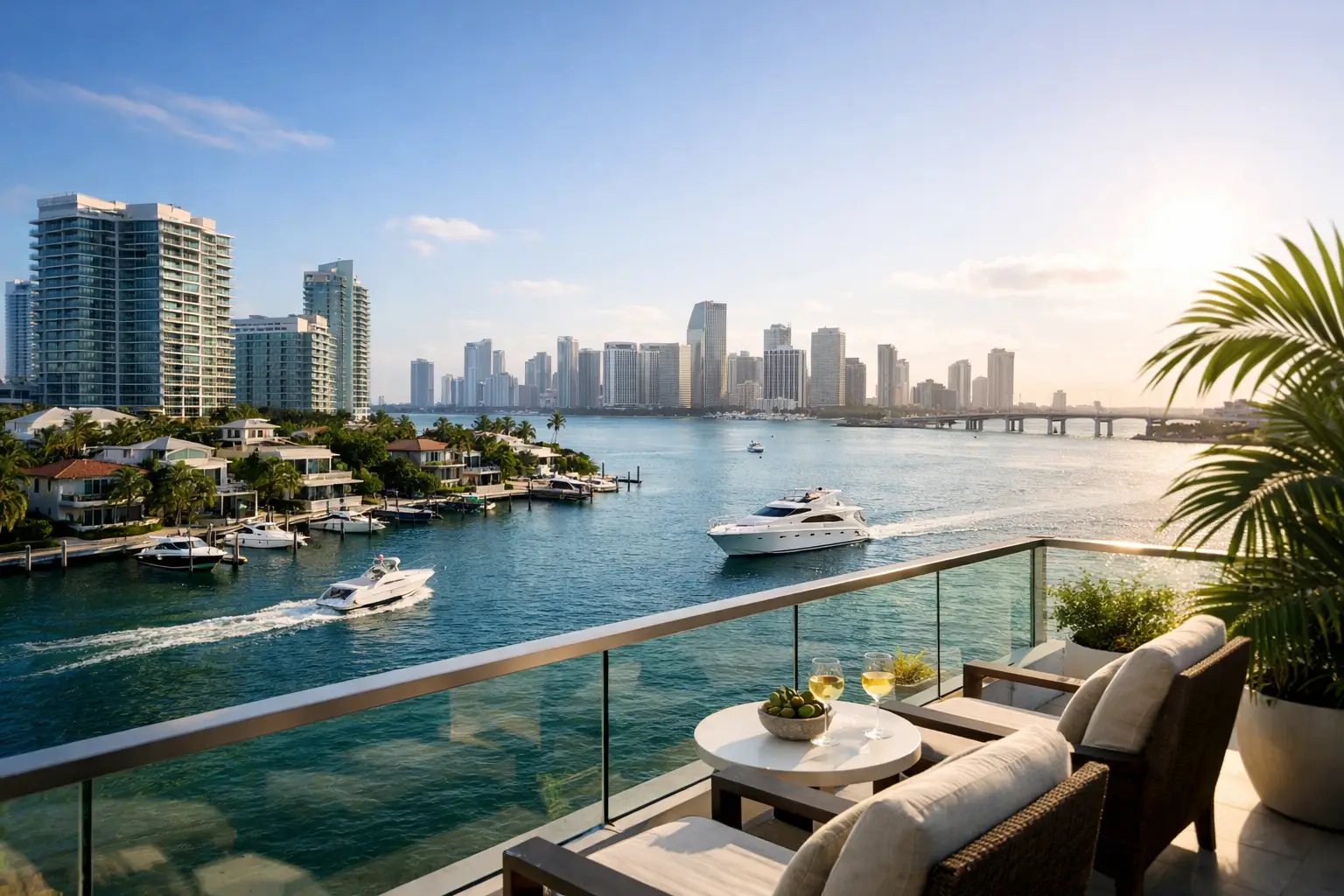
Miami Waterfront Living Trends Shaping Demand
A waterfront address in Miami is no longer defined by a balcony and a view alone. Current Miami waterfront living trends show buyers placing equal value on the daily experience inside the building, the neighborhood beyond it, and the long-term quality of the property itself. For discerning buyers, a home on the bay, ocean, river, or Intracoastal has become a lifestyle decision with an investment lens.
That shift is shaping demand across Miami Beach, Brickell, Edgewater, Coconut Grove, Key Biscayne, Sunny Isles Beach, and select waterfront pockets throughout greater South Florida. The most sought-after properties still deliver the visual impact buyers expect, but they also solve for privacy, service, work-from-home flexibility, walkability, and ease of ownership.
Miami Waterfront Living Trends Go Beyond the View
Water remains a powerful emotional draw. A sunrise over Biscayne Bay, open ocean vistas, boat access, and the ability to step outside into a more relaxed setting remain central to Miami’s appeal. Yet the definition of waterfront luxury has expanded.
Buyers increasingly compare what happens after they enter the residence. Is the floor plan functional for full-time living? Does the building have attentive staff and well-maintained common areas? Can residents move easily between work, fitness, dining, and recreation without turning every errand into a drive? A beautiful view may start the conversation, but the complete ownership experience often determines which property earns the offer.
This is particularly relevant for buyers relocating from major metropolitan markets, international purchasers, and local residents moving up within Miami. Many are not looking for a weekend escape. They want a residence that performs well as a primary home while preserving the sense of arrival that makes waterfront living special.
Full-Service Buildings Remain a Major Draw
In the condominium market, amenities have moved from a secondary consideration to a central part of the value proposition. Buyers are paying close attention to the quality, condition, and practicality of a building’s services.
A staffed lobby, valet, secure parking, package handling, fitness facilities, spa areas, waterfront pools, private lounges, and well-designed outdoor spaces can make a meaningful difference in daily life. The most successful amenity programs do not simply add more features. They create useful ones. A polished residents’ lounge matters more when it can support a private meeting; a gym matters more when it is genuinely equipped for regular training.
Service levels also influence how effortless a property feels for owners who travel frequently or maintain more than one residence. For this segment, professional management, reliable maintenance, and a clear building operation can be just as valuable as the square footage inside the unit.
There is a trade-off. Higher-service buildings can carry higher association fees, and buyers should understand exactly what those fees cover, how reserves are structured, and whether planned improvements may affect future costs. A knowledgeable review of the building’s documents is essential, especially when comparing older established towers with newer luxury developments.
New Development Is Raising Expectations
Pre-construction and recently completed waterfront residences continue to influence buyer expectations across the market. New projects often emphasize private elevator entry, expansive terraces, chef-caliber kitchens, smart-home features, curated wellness spaces, and architecture designed to maximize water exposure.
For buyers who value a contemporary finish and a more tailored lifestyle program, new development can be compelling. It also offers an opportunity to select from different layouts, orientations, and finish packages before inventory becomes limited. In a waterfront setting, details such as floor height, terrace depth, sightlines, and the direction of a view can materially shape both enjoyment and future desirability.
However, newer is not automatically better for every buyer. An established building may offer a more mature location, larger interiors, immediate occupancy, or a proven service culture. Pre-construction buyers should also consider delivery timing, deposit schedules, developer track record, and how the finished building will fit their intended use. The right choice depends on whether the priority is customization and newness, or immediate lifestyle access.
Neighborhood Lifestyle Is Part of the Property
Miami’s waterfront market is not one experience. Each area speaks to a different rhythm of life, and buyers are becoming more intentional about matching the address to their routine.
Brickell and Downtown Miami appeal to those who want an urban waterfront environment, proximity to business centers, dining, and cultural venues, and the convenience of a vertical lifestyle. Edgewater offers many buyers broad bay views and a residential feel while remaining close to the city’s core. Coconut Grove attracts those seeking a more relaxed, established waterfront setting with marinas, greenery, and a village-like character.
Miami Beach remains distinctive for its beach access, hospitality-driven energy, and iconic oceanfront residences. Key Biscayne draws buyers who prioritize privacy, outdoor recreation, and a more insulated island setting. Sunny Isles Beach and Aventura continue to attract residents looking for full-service high-rise living, open water views, and access to shopping, dining, and recreation.
The best neighborhood is not always the one with the most recognizable name. It is the one that aligns with how an owner plans to live. A buyer who expects to walk to work and restaurants may value Brickell differently than someone whose ideal morning includes a marina, a bike ride, and a quieter residential setting.
Flexible Spaces Are Now Expected
The waterfront residence has become more adaptable. Buyers want homes that can accommodate remote work, visiting family, personal fitness, and entertaining without compromising privacy. In condos, this often increases demand for den-plus layouts, split-bedroom plans, and residences with enough separation between social areas and private rooms.
Outdoor space remains a priority, especially terraces that feel large enough to use rather than simply admire. A well-proportioned terrace can function as an extension of the living room, creating room for dining, lounging, and enjoying Miami’s year-round outdoor lifestyle. In single-family waterfront homes, buyers often look beyond the dock or pool to consider how indoor and outdoor spaces connect.
This preference for flexibility can change the value equation. A slightly smaller residence with an excellent layout may serve a buyer better than a larger home with underused formal rooms. During a property tour, it helps to assess the home through the lens of an ordinary Tuesday, not just a memorable weekend.
Water Access Has Its Own Premium
Not all waterfront is the same. Some buyers want a direct oceanfront setting; others prioritize bay views, protected water, boating access, or a private dock. These distinctions affect lifestyle, maintenance considerations, and market appeal.
For boat owners, the details deserve careful attention. Dock configuration, water depth, bridge clearance, marina availability, and the practical route to open water can be as important as the home’s interior. For condo buyers, a building’s relationship to the water may be more about views, walkability, and amenity design than direct vessel access.
A clear understanding of the desired water experience prevents a common mistake: falling in love with a view that does not support the lifestyle a buyer actually wants. The right waterfront property should make the preferred version of Miami living easier to enjoy.
Buyers Are Looking More Closely at Quality and Preparedness
Waterfront purchasers are also asking sharper questions about construction, ongoing maintenance, insurance, building reserves, and the condition of shared systems. This is a sign of a more sophisticated buyer, not a diminished appetite for waterfront property.
Well-managed properties that demonstrate consistent care can stand apart. Buyers increasingly appreciate updated windows and doors, dependable backup systems, thoughtful landscape maintenance, and a building team that communicates clearly. In single-family homes, attention often turns to roof condition, seawalls, drainage, generators, and the maintenance history of major systems.
These considerations should be viewed alongside location and aesthetics, not after them. A polished residence with a disciplined approach to maintenance supports both peace of mind and long-term ownership confidence.
What This Means for Buyers and Sellers
For buyers, current Miami waterfront living trends reward focus. Start by identifying the water experience, neighborhood pace, and ownership style that fit your needs. Then compare properties based on their complete offering: layout, service, building health, amenities, outdoor space, and future usability.
For sellers, presentation matters more when buyers are evaluating the full lifestyle package. A residence should be positioned around its strongest daily advantages, whether that is a sunset terrace, walkable location, boat access, high-floor views, or a refined amenity program. Accurate pricing and strong visual marketing remain essential, but a well-told lifestyle story helps qualified buyers see themselves in the home.
Miami’s waterfront market continues to reward properties that combine beauty with practical living. The most effective next step is to tour a focused selection with a clear picture of your lifestyle priorities, then let the right address prove how it fits.