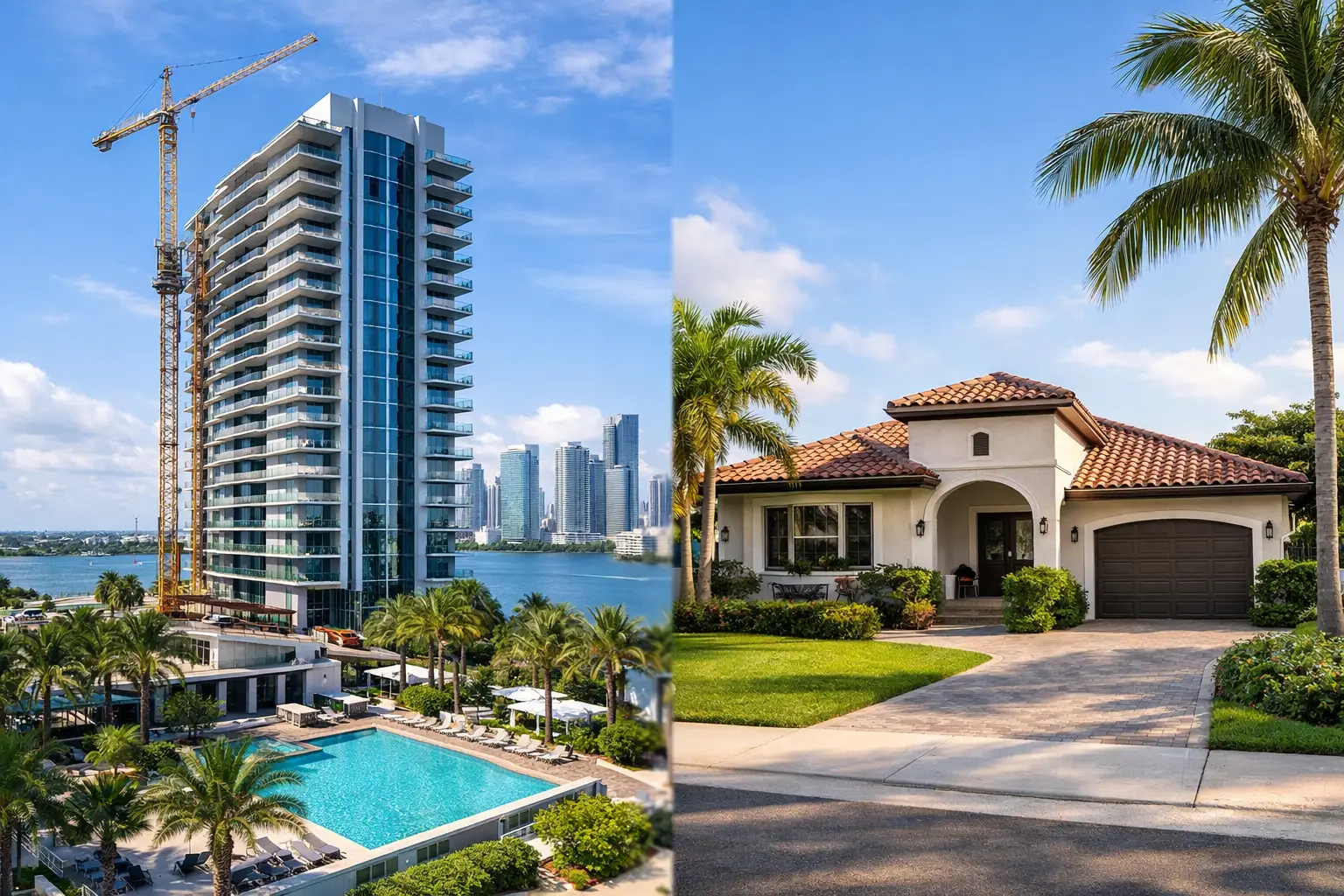
New Construction Versus Resale Miami Homes
A buyer choosing between a skyline-view residence that will not deliver for two years and a move-in-ready home with a mature garden is not simply choosing a property. They are choosing a timeline, a financial structure, and a version of Miami living. In the conversation around new construction versus resale Miami property, the better choice depends on how you plan to use the home, how long you expect to hold it, and how much certainty you want before closing.
For some buyers, a new luxury condominium in Brickell, Edgewater, or Sunny Isles Beach offers contemporary design, resort-caliber amenities, and the appeal of being the first owner. For others, a resale residence in Coconut Grove, Coral Gables, or Miami Beach provides an established setting, immediate occupancy, and a clearer view of what they are buying. Both can be exceptional opportunities when evaluated with local market context.
New Construction Versus Resale Miami: The Core Difference
New construction can refer to a recently completed residence or a pre-construction purchase made before the building is delivered. Resale property refers to a home or condo that has already been owned and occupied, although it may be fully renovated and feel nearly new.
The distinction matters because the buying process changes considerably. A resale transaction is generally more immediate: you view the actual unit, negotiate with an individual seller, complete inspections, secure financing, and close on an established schedule. With pre-construction, buyers typically contract directly with a developer, make deposits in stages, and wait for completion. The finished home may be spectacular, but the process requires comfort with a longer horizon and the details of a developer contract.
A newly completed building sits between the two. You can often tour the actual residence and close sooner, while still receiving current finishes, new systems, and modern amenity spaces. Availability may be more limited than during an early pre-construction release, but it can be a compelling option for buyers who want new without a multi-year wait.
Why Buyers Choose New Construction
Miami’s new developments are designed around how residents want to live now. Private elevator entries, expansive terraces, wellness areas, co-working lounges, concierge service, and curated social spaces can make daily life feel more refined and convenient. In the right building, amenities are not an afterthought. They are part of the residence’s lifestyle value.
New construction also offers the appeal of current architecture and finishes. Buyers may find larger-format flooring, smart-home features, contemporary kitchens, impact-rated windows, energy-conscious systems, and layouts built for indoor-outdoor living. Early purchasers may have the opportunity to select finishes or secure a preferred line, floor level, or view before inventory becomes scarce.
For an investor, pre-construction can provide a defined entry point with payments spread over a construction timeline rather than requiring the entire purchase price immediately. That does not mean every new development is automatically the stronger investment. Rental policies, anticipated carrying costs, building positioning, supply in the surrounding area, and the intended hold period all deserve close attention.
The Trade-Offs of Buying Pre-Construction
The same features that make pre-construction attractive require patience and careful due diligence. Delivery dates are estimates, and project schedules can change. Renderings and model residences communicate the design vision, but they are not the same as standing in a finished unit and observing natural light, elevator traffic, views, or the feel of the neighborhood at different times of day.
Buyers should also review the deposit schedule, estimated closing costs, association rules, rental restrictions, parking assignments, and the developer’s finish specifications. A sophisticated buyer does not focus only on the purchase price. They consider the full ownership picture, including anticipated monthly expenses and how the residence will fit their personal or investment strategy after delivery.
A buyer’s agent experienced in Miami pre-construction can help interpret these terms, compare the project with nearby alternatives, and identify questions that may not be apparent in a sales gallery. Representation remains valuable even when the sales process appears straightforward.
The Case for Miami Resale Property
Resale offers a powerful advantage: what you see is what you can buy. You can experience the exact view, layout, condition, building operations, neighborhood rhythm, and amenity offering before making an offer. This clarity is especially meaningful for a buyer relocating from another state or country, or for someone who needs a residence on a specific timeline.
Established buildings also come with a track record. You can assess how common areas have been maintained, whether the lobby and amenities suit your expectations, and how the association manages the property. In a single-family home, you can observe landscaping, street presence, outdoor entertaining areas, and the practical condition of the roof, pool, systems, and other major components.
Resale can also open doors to neighborhoods where developable land is limited. A character-rich home in Coconut Grove or Coral Gables, a waterfront residence in Key Biscayne, or an established Miami Beach condominium may offer a sense of place that cannot be replicated by a newly built tower. The value is often as much about location and lifestyle as it is about the finishes inside.
Inspections and Negotiation Create Opportunity
A resale purchase typically allows for inspections and more direct price negotiation. Depending on the market conditions, buyers may be able to request repairs, credits, flexible closing terms, or the inclusion of furnishings. A well-prepared offer can account for the property’s condition while preserving the buyer’s larger goals.
That said, resale does not always mean lower cost. A renovated home, a rare waterfront position, or a highly desirable line in an established luxury building can command a premium. Older properties may also require budgeting for future updates, special assessments, insurance considerations, or modernization. The strongest resale purchases are not merely homes with attractive asking prices. They are residences whose condition, association profile, location, and future appeal align with the buyer’s intended use.
Compare the Numbers Beyond the Purchase Price
The financial comparison between new construction and resale should go beyond a simple price-per-square-foot calculation. New development buyers may face staged deposits, developer closing charges, and higher association fees tied to extensive amenities. In exchange, they may receive new mechanical systems, warranties, and lower near-term maintenance needs.
Resale buyers usually need to arrange financing and closing on a shorter schedule. They may have more room to negotiate, but they should also evaluate immediate repair needs, renovation budgets, taxes, association financials, and potential capital projects. In a condominium, reviewing the budget, reserves, meeting minutes, and building rules is essential. A beautiful unit cannot offset an ownership structure that does not match your needs.
For a cash buyer, the decision may center on value, timing, and future flexibility. For a financed buyer, lender requirements and rate considerations can influence the path. For an international buyer, the deposit structure and ownership plan may carry additional importance. There is no single winning formula, which is why comparable properties should be evaluated side by side rather than in isolation.
Lifestyle Should Lead the Decision
A residence is also a daily experience. If your ideal Miami routine includes walking to restaurants, offices, the waterfront, and cultural destinations, a full-service new condominium in Downtown Miami, Brickell, or Wynwood may be the right fit. If privacy, green space, a pool, and a more residential atmosphere matter most, a resale home in Coconut Grove, Coral Gables, or Key Biscayne may offer greater alignment.
Consider how often you will use the home. A primary resident may prioritize storage, parking, school access, and quiet surroundings. A seasonal owner may value lock-and-leave convenience and concierge support. An investor may focus on rental parameters, demand drivers, and operational simplicity. The property should support the life you intend to lead, not just look impressive during a showing.
A Smarter Way to Choose Between New and Resale
Begin with your non-negotiables: desired move-in date, preferred neighborhood, budget for monthly ownership, privacy needs, and intended use. Then compare a short list of new construction, pre-construction, and resale options that genuinely fit those criteria. Touring resale homes while reviewing new development plans often sharpens your priorities quickly.
Miami Best Property can help buyers assess both sides of the market, from virtual discovery and active listings to developer opportunities and neighborhood-specific guidance. The goal is not to steer every buyer toward the newest building or the most familiar resale address. It is to identify the residence that gives you confidence on closing day and satisfaction long after you receive the keys.
The best Miami purchase is the one that matches your timeline, protects your flexibility, and makes the city’s extraordinary lifestyle feel like your own.