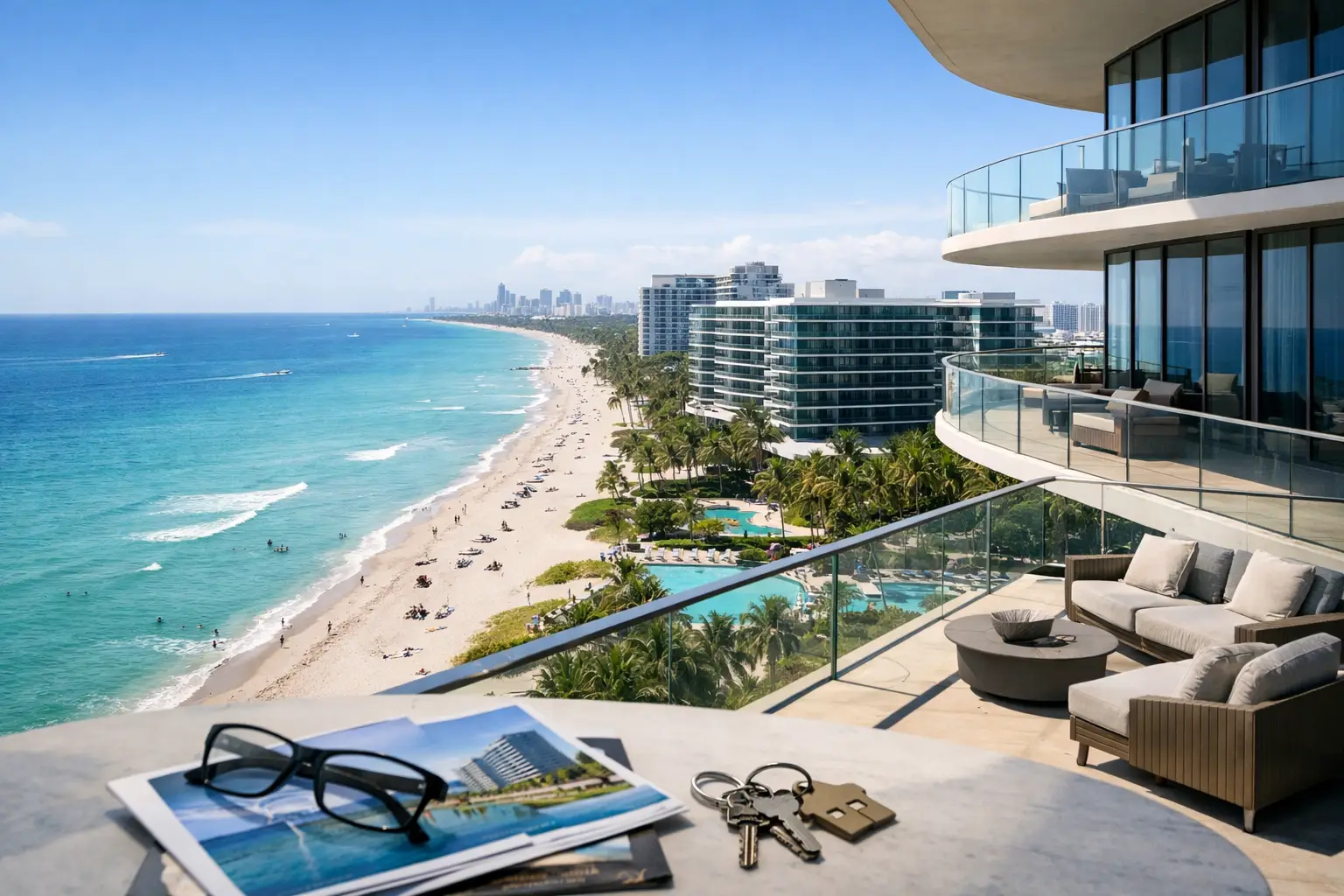
Miami Beachfront Condo Guide for Smart Buyers
A true miami beachfront condo guide starts with one reality: two buildings can sit on the same stretch of sand and offer completely different ownership experiences. One may feel like a private resort with strong resale appeal, while the other looks impressive online but comes with higher carrying costs, stricter rental rules, or a layout that limits long-term value. If you are buying on the beach, the view matters – but the details matter just as much.
For many buyers, beachfront ownership is part lifestyle decision and part financial decision. You may want direct ocean access, a lock-and-leave second home, a full-time residence, or an investment property with rental flexibility. Those goals are not interchangeable, and they should shape every part of your search, from building selection to budget.
What a Miami beachfront condo guide should help you answer
The best beachfront purchase is rarely just about finding the prettiest unit. It is about matching the property to how you plan to live, use, and hold it. A buyer looking for quiet, residential luxury may prioritize Key Biscayne or a more boutique stretch of Miami Beach. Someone who wants newer towers, strong service, and easy access to shopping and dining may lean toward Sunny Isles Beach or certain parts of Miami Beach.
That is why location should be judged at two levels. First, there is the city or submarket. Second, there is the specific building. In beachfront real estate, building quality, management, reserves, amenity depth, and rental policy can affect value almost as much as the address itself.
Start with the right beachfront lifestyle
Before comparing floor plans or asking prices, define the ownership experience you want. Full-time residents often care most about daily livability. That means practical layouts, usable balconies, storage, parking, resident service, and easy access to everyday essentials. A vacation-home buyer may place more weight on hospitality-style amenities, security, and low-maintenance ownership.
Investors usually enter the search with different priorities. Rental restrictions, minimum lease terms, seasonal demand, and building rules will have a direct impact on income potential. A condo that feels ideal for personal use may be far less attractive if your strategy depends on flexibility.
This is where trade-offs start to appear. Newer luxury towers often deliver stronger amenity packages, modern finishes, and better wellness offerings, but they can also come with higher monthly fees and premium pricing. Older landmark buildings may offer larger floor plans and more favorable price-per-square-foot metrics, though renovation costs and maintenance expectations can change the equation.
Where buyers focus in the beachfront market
Miami Beach remains the most recognizable option for many buyers, but it is not a single experience. Some areas feel highly residential and polished, while others are more active and hospitality-driven. Buyers who want a classic oceanfront Miami lifestyle with global recognition often begin here because inventory spans boutique buildings, established luxury towers, and newer branded residences.
Sunny Isles Beach appeals to buyers looking for a vertical luxury profile. The skyline, full-service towers, and concentration of newer oceanfront product create a distinctly modern feel. It often attracts international buyers, second-home owners, and purchasers who want high-end amenities and a resort-like standard of service.
Key Biscayne offers a different rhythm. The appeal here is privacy, community feel, and a more residential beachfront environment. For some buyers, that balance is exactly the point. For others, the trade-off is less immediate access to the energy and density found in other parts of the market.
Hallandale Beach and nearby coastal pockets can also enter the conversation when buyers want beachfront positioning with a slightly different pricing profile or building mix. The right fit depends on whether your priority is prestige, privacy, rental flexibility, walkability, or a combination of all four.
Pricing goes beyond the purchase price
In any serious miami beachfront condo guide, budget should be discussed in layers. The contract price is only the first layer. Buyers also need to evaluate association fees, special assessments if applicable, insurance-related building costs, valet or parking charges, and expected interior upgrades.
Oceanfront ownership generally carries higher operating costs than inland condo ownership. That does not make it a poor decision – it simply means the math needs to be honest from the beginning. A lower-priced unit in a building with high monthly fees and upcoming capital work may be less appealing than a higher-priced unit in a stronger building with better reserves and a more predictable ownership profile.
For cash buyers and financed buyers alike, this is where guidance matters. It is easy to focus on the asking price and underweight the carrying costs. In practice, monthly ownership expense often shapes satisfaction more than the headline number.
How to evaluate the building, not just the unit
A beautiful residence can lose some of its appeal if the building underperforms. On the beachfront, the building is part of the asset. Service quality, maintenance standards, lobby and common area presentation, elevator reliability, reserve funding, and management reputation all affect both day-to-day enjoyment and future marketability.
Look closely at the amenity package, but do not treat every amenity as equal. An oversized list of features is less meaningful than well-executed essentials. Buyers tend to get the most long-term value from strong security, attentive staff, quality pool and beach service, a well-equipped fitness center, and a clean, current common-area experience. A flashy extra that is rarely used may look impressive during a tour but add little to real ownership value.
Floor plan functionality matters too. Direct ocean views may command a premium, but line efficiency, natural light, bedroom separation, den usability, and terrace depth all influence how a home actually lives. In some buildings, a slightly lower-floor residence with a better layout may outperform a higher-floor unit with a compromised plan.
Rental rules can change the whole decision
One of the biggest mistakes beachfront buyers make is assuming all luxury condos offer similar rental flexibility. They do not. Some buildings are designed for stable residential ownership and restrict leasing more heavily. Others permit shorter minimum lease terms or allow more frequent rentals, which can be attractive for part-time owners and investors.
This distinction affects both use and resale. If you plan to occupy the property only part of the year, rental policy should be one of your earliest filters, not an afterthought. The same applies if you expect the option to generate income later, even if that is not your immediate plan.
It also helps to ask how the building is perceived in the market. A tower with excellent amenities but a reputation for transient occupancy may attract a different buyer pool than a building known for privacy and long-term ownership. Neither is automatically better. It depends on your goals and the audience you may eventually sell to.
New construction versus established oceanfront buildings
Pre-construction and newer delivery towers attract buyers who want modern design, advanced wellness amenities, and contemporary finishes without major renovation work. They can also offer the appeal of being first owner, along with curated services and strong visual impact. For buyers who prioritize prestige and presentation, that has real value.
Established buildings offer a different advantage. You can evaluate the actual living experience rather than relying on renderings, delivery timelines, or projected operating costs. There is also often more room to compare historical sales patterns, resident culture, and the practical reality of the building.
The trade-off is straightforward. Newer product may feel more effortless, but usually at a premium. Older product may offer more square footage or a stronger entry point, but the unit and building may require more scrutiny. Buyers who understand that balance tend to make better long-term decisions.
A practical approach to touring beachfront condos
When you tour, try to move past first impressions quickly. Yes, the view matters. So do the lobby, the pool deck, and the arrival experience. But after that, focus on the details that affect ownership. Check ceiling height, window condition, balcony usability, storage, noise exposure, and how the residence feels in natural daylight.
Then shift attention to the building operation. Observe the pace of the valet, the professionalism of the front desk, the condition of elevators and hallways, and whether amenities feel actively maintained or simply photographed well. Luxury is not just design. It is consistency.
This is also where local representation can save time. A brokerage team with market-specific experience can often identify which buildings align with your goals before you spend weekends touring properties that were never a fit. For buyers using a digital-first search process, that combination of virtual discovery and local insight tends to produce better results.
The right condo is the one that fits your version of Miami
Beachfront real estate in South Florida is aspirational, but the smartest purchases are grounded in clarity. The right condo is not always the most expensive one, the newest one, or the one with the widest balcony. It is the residence and building that fit the way you want to live, the level of service you expect, and the financial structure you are comfortable carrying.
If you approach the search with clear priorities, realistic numbers, and a close look at both the unit and the building, the beachfront market becomes far easier to navigate. The reward is not just ocean views. It is owning a piece of Miami that feels right every time you arrive.