Miami Luxury Buyer Trends Shaping the 2026 Market
A luxury buyer walking into a Miami residence today is assessing far more than the view. They are noticing the quality of the arrival experience, the discretion of the building staff, the functionality of the floor plan, and whether the home is ready to enjoy without a long renovation timeline. These Miami luxury buyer trends reflect a market where lifestyle expectations and investment discipline increasingly move together.
For buyers considering a primary residence, pied-à-terre, or long-term South Florida asset, the most compelling properties tend to make daily life feel effortless. The right address still matters, but so do thoughtful design, privacy, service, and a clear understanding of what the buyer wants from Miami living.
Miami Luxury Buyer Trends: Quality Over Excess
Square footage remains valuable, particularly for buyers relocating from major metropolitan markets or seeking room for family and guests. Yet larger is not automatically better. Many buyers are placing a premium on well-composed residences with practical bedroom separation, generous closets, private elevator entry, usable outdoor space, and finishes that hold up to everyday use.
Turnkey condition is especially influential. A newly renovated home or a professionally finished condo can attract stronger interest because it reduces uncertainty around design decisions, contractor availability, permits, and timing. This does not mean every buyer avoids renovation. Some specifically seek older waterfront homes or established residences in Coconut Grove and Coral Gables where they can create something personal. The difference is that they want a clear vision, realistic scope, and a property whose location justifies the work.
The trade-off is straightforward. A turnkey home may command a premium, while a property with renovation potential can offer more freedom and a different value proposition. Buyers should compare not only asking prices, but also the time, carrying costs, design budget, and approvals needed to achieve their intended result.
Privacy Has Become a Core Luxury Feature
Miami’s luxury appeal is connected to energy, culture, dining, and waterfront living, but many high-end buyers want a home that provides a retreat from all of it. Privacy is increasingly evaluated as a tangible part of a property’s value.
In condominium residences, that can mean a limited number of homes per floor, private or semi-private elevators, controlled access, dedicated parking, and attentive staff. In single-family homes, buyers often look for gated entries, landscaped setbacks, protected sightlines, and outdoor areas that feel genuinely private rather than simply large.
This preference is helping distinguish buildings and neighborhoods that deliver a more residential experience. A buyer may accept a smaller amenity program or a slightly longer drive in exchange for greater quiet, stronger privacy, and a more intimate atmosphere. For others, walkability and immediate access to Brickell, Miami Beach, or Downtown Miami remain priorities. The best choice depends on how the home will actually be used throughout the year.
Service and Management Influence the Decision
At the top of the market, the building itself is part of the purchase. Buyers are paying close attention to concierge standards, valet operations, package handling, security protocols, maintenance quality, and the condition of shared spaces. These details affect convenience, ownership experience, and long-term appeal.
Before making an offer, it is wise to look beyond the model residence or staged photography. Review the lobby at different times of day, observe the pace of arrivals, ask about amenity reservations, and understand how the association approaches maintenance and capital projects. A sophisticated buyer is not just purchasing a unit. They are choosing the operating environment around it.
Waterfront Access Means Different Things to Different Buyers
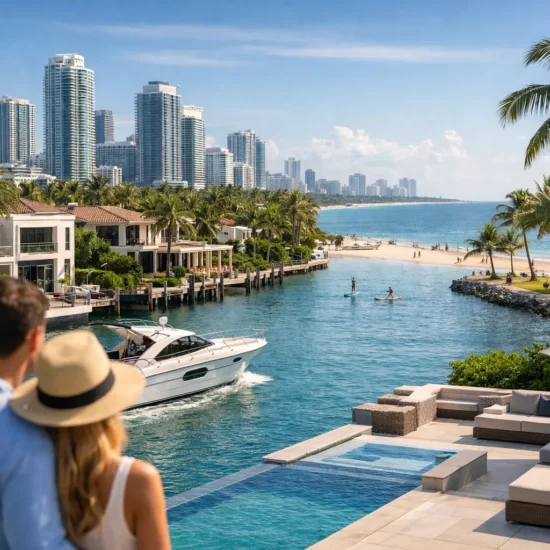
Water remains one of Miami’s defining luxuries, but buyer priorities are more specific than a simple preference for a water view. Some want direct boating access and a dock arrangement that fits their vessel. Others value a wide bay view, beach proximity, or the calm of a protected island setting. A family may prioritize easy access to parks and schools, while a second-home owner may place more weight on lock-and-leave convenience.
That distinction matters when comparing homes across Key Biscayne, Miami Beach, North Bay Village, Sunny Isles Beach, and waterfront pockets of the mainland. A property can be beautiful and still be the wrong fit if the water lifestyle does not match the buyer’s routine.
Buyers should also consider the orientation of the residence, outdoor exposure, marina rules where applicable, and the practical path from front door to water. For a serious boater, bridge clearance, dock specifications, and navigation time can matter as much as the view from the living room. For a condo buyer, a private beach club or a well-managed waterfront amenity may deliver more value than direct ownership responsibilities.
Pre-Construction Is Being Chosen More Selectively
Pre-construction continues to attract buyers who want contemporary architecture, new building systems, elevated amenities, and the opportunity to secure a future residence before completion. It can be particularly appealing for buyers with flexible timing who value customization and a longer planning horizon.
Still, luxury buyers are approaching new development with sharper questions. They want to understand the developer’s track record, the exact residence configuration, deposit schedule, estimated delivery window, views that may change over time, and the cost structure after closing. They are comparing branded experiences, service models, unit scarcity, and the practical livability of the plan rather than responding to marketing alone.
A new construction purchase can offer a clean, modern ownership experience, but it requires patience and informed due diligence. Resale homes can provide immediate occupancy, established surroundings, and the ability to assess the finished building in real time. Neither path is universally better. The right option depends on timing, risk tolerance, design preferences, and whether the buyer wants to enjoy Miami now or plan for a future move.
Lifestyle Location Is Becoming More Personal
The strongest luxury search is rarely defined by a single neighborhood name. Buyers are increasingly choosing areas based on how they want a typical Tuesday to feel. Do they want to walk to offices, restaurants, and cultural venues? Do they prefer a leafy residential setting with room for outdoor living? Is the priority a beach morning, a marina afternoon, or a short commute to Miami International Airport?
Brickell appeals to buyers who value a polished urban rhythm and convenience. Coconut Grove offers a more relaxed, established residential character with access to parks and the bay. Edgewater can suit those who want dramatic water views near Downtown Miami, while Aventura and Sunny Isles Beach remain compelling for buyers seeking full-service condominium living and proximity to the coast.
There is no universal best neighborhood because luxury is personal. A buyer who values walkability may find a gated estate too removed from their preferred routine. A buyer seeking space, privacy, and a landscaped setting may feel constrained by a high-rise, even one with exceptional amenities. Clarifying those priorities early makes the property search more efficient and protects against being distracted by impressive features that do not serve the intended lifestyle.
What Sophisticated Buyers Are Doing Differently
The most prepared buyers begin with a focused brief rather than a broad wish list. They identify their non-negotiables, define their ideal ownership timeline, and decide where they are willing to compromise. This creates a more productive search and allows them to move confidently when the right residence appears.
They also use virtual tours, video, floor plans, and market guidance to narrow options before scheduling in-person visits. Digital discovery saves time, but it does not replace a careful property review. Natural light, ceiling height, traffic patterns, finishes, surrounding construction, and the feeling of an arrival sequence are best understood on site.
Representation remains valuable throughout this process. A local luxury advisor can help interpret comparable properties, identify trade-offs between buildings or neighborhoods, coordinate due diligence, and bring the search back to the buyer’s goals when choices become complex. Miami Best Property approaches this work with the local perspective and property access needed to turn a broad lifestyle vision into a clear acquisition strategy.
The next exceptional Miami home may not be the largest, newest, or most visible option. It will be the one that aligns location, privacy, quality, and daily enjoyment with the way its owner intends to live.