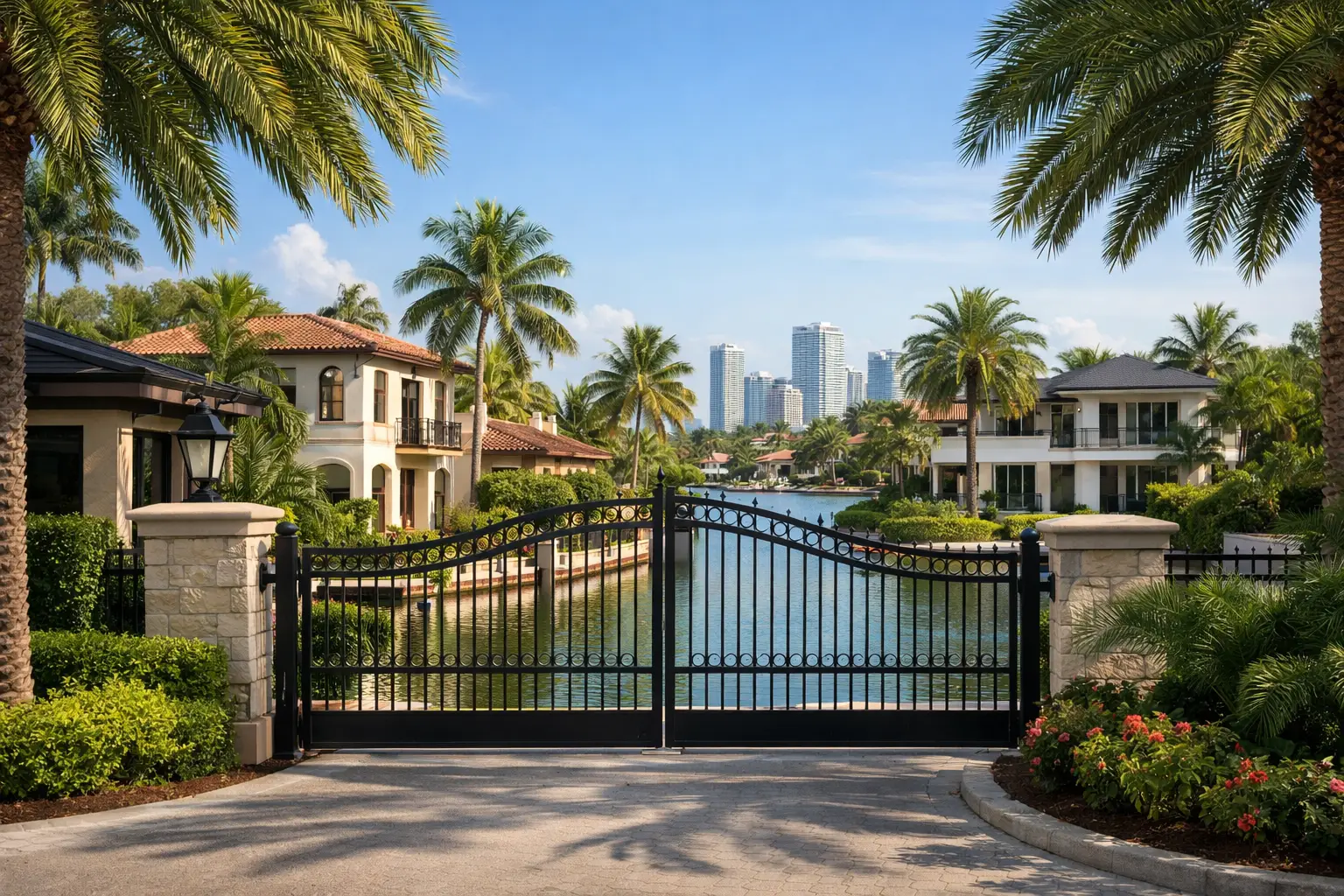
Miami Homes for Sale in Gated Community Areas
Privacy means different things in Miami. For some buyers, it means a guarded entrance and a quiet residential street minutes from the city. For others, it means a waterfront estate with limited access, deep lot lines, and a stronger sense of separation from the pace of daily life. That is why searches for miami homes for sale gated community options tend to be highly intentional. Buyers are not just looking for a house. They are looking for a specific standard of living.
In Miami, gated communities appeal to several types of buyers at once. Families often value controlled access, neighborhood amenities, and a more contained setting for daily routines. Executives and relocating professionals may prioritize convenience, prestige, and a home that feels secure when travel is frequent. Investors and second-home buyers are usually focused on long-term desirability, location quality, and whether the property will remain competitive in a market where lifestyle carries real value.
Why Miami homes for sale in gated community settings stay in demand
The appeal starts with privacy, but it rarely ends there. Many gated communities offer a combination of visual consistency, neighborhood maintenance standards, and amenities that are difficult to replicate in non-gated areas. That can include private roads, waterfront access, club facilities, tennis courts, marinas, or simply a more curated residential environment.
There is also a practical side. Buyers looking in Coral Gables, Coconut Grove, Key Biscayne, or select parts of Aventura are often weighing more than square footage and finishes. They are evaluating entry control, guest access, parking patterns, neighborhood traffic, and the overall feel of the community. In luxury segments, these details matter because they shape daily experience as much as the home itself.
That said, not every gated community offers the same value. Some provide a resort-style atmosphere with extensive amenities and a stronger HOA structure. Others are much more understated, with limited common features but a premium placed on privacy and location. The right fit depends on whether the buyer wants lifestyle programming, architectural prestige, low-maintenance ownership, or a quieter residential setting near core business and cultural districts.
What to expect from pricing and property types
When buyers search miami homes for sale gated community inventory, they often assume every option will fall into the ultra-luxury category. Many do, but the category is broader than that. Miami includes exclusive waterfront enclaves with multimillion-dollar estates, established family-oriented communities with detached homes, and attached residences or townhomes in secured developments.
Pricing usually reflects a mix of factors beyond the house itself. Lot size, water frontage, renovation quality, school proximity, architectural style, and the reputation of the community all influence value. A smaller, updated home in a highly regarded gated location may command more interest than a larger house in a less established area. The community often becomes part of the asset.
Buyers should also account for association dues, where applicable. In some communities, HOA fees cover meaningful benefits such as landscaping, security, common area maintenance, and amenities. In others, the monthly cost may feel high relative to what is actually provided. This is one of the clearest areas where local guidance matters. Two homes with similar asking prices can carry very different ownership costs once dues, maintenance expectations, and property taxes are considered.
Waterfront versus inland gated homes
Waterfront gated homes sit in a category of their own. They appeal to buyers who want boating access, open views, and a stronger luxury profile. These properties often trade at a premium because they combine two high-demand features at once – exclusivity and waterfront living.
Inland gated homes can offer better value per square foot while still delivering the privacy and neighborhood structure many buyers want. For primary residents, this can be the smarter balance. You may give up direct water access, but gain a more practical lot, better everyday convenience, or a purchase price that leaves room for customization.
Newer finishes versus established character
Some buyers want a turnkey contemporary home with clean lines, open interiors, and updated systems. Others are drawn to mature landscaping, larger lots, and communities with an established identity. Neither is automatically better. A newer home may reduce immediate renovation costs, while an older residence in a prime gated setting may offer stronger upside if modernized thoughtfully.
Best fit neighborhoods for gated home buyers
Not every Miami-area neighborhood is equally known for gated single-family living. Some are more condo-driven, while others are defined by private enclaves and estate homes.
Coral Gables stands out for buyers seeking elegance, mature tree-lined streets, and access to prestigious residential pockets where gated living often feels refined rather than flashy. Coconut Grove appeals to those who want privacy with character, greenery, and proximity to waterfront lifestyle. Key Biscayne attracts buyers looking for a more contained island setting with a polished residential atmosphere. Aventura can be appealing for buyers who want access to shopping, golf, and a well-established luxury market with select secured communities.
The right area depends on routine as much as taste. A buyer working regularly in Brickell may value shorter travel times and prefer a gated location that keeps the urban core accessible. A family may place more importance on lot size, street calm, and community amenities. A second-home buyer may focus on lock-and-leave convenience and long-term prestige.
How to evaluate a gated community beyond the gate
The gate itself is only the beginning. Buyers should look closely at how the community functions on a daily basis. Is security staffed full-time, or is access primarily automated? Are roads and landscaping maintained to the standard the entry suggests? Do architectural guidelines protect property values, or do they feel restrictive for your plans?
Walk or drive the neighborhood at different times if possible. The tone of a community on a weekday morning can be very different from a weekend afternoon. Look at how homes are maintained, how guest access works, and whether the community feels active, quiet, formal, or family-centered. These details help determine whether the setting fits your lifestyle.
It is also worth reviewing what is allowed. Some buyers assume a gated home gives them maximum freedom, only to find rules around exterior renovations, parking, rentals, pets, or dock improvements. These restrictions are not necessarily a drawback. In many cases, they help preserve the neighborhood standard that attracted buyers in the first place. But they should be understood early.
Questions worth asking before you make an offer
A smart purchase starts with the right due diligence. Ask about HOA fees and reserve health, recent assessments, security structure, approval requirements, and any planned capital improvements. If the property is waterfront, ask about seawall condition, dock specifications, and water access limitations.
For buyers considering the home as both a lifestyle purchase and an investment, resale factors matter too. How often do homes in the community come to market? When they do, do they attract quick interest? Is demand driven by owner-occupants, second-home buyers, or both? Strong communities tend to have a clear buyer profile and consistent desirability.
Why representation matters in this segment
Gated communities can be more nuanced than open-market neighborhood shopping. Inventory may be limited, pricing can reflect micro-market dynamics, and the difference between a strong purchase and an average one often comes down to local interpretation, not just online search filters.
This is where experienced guidance becomes valuable. A polished listing may highlight finishes and square footage, but a local real estate advisor can help you compare community quality, fee structures, long-term appeal, and whether the asking price reflects the home, the lot, the gate, or all three. For buyers moving from out of state or abroad, that level of context can save time and reduce expensive missteps.
Miami Best Property approaches this search with exactly that mindset – combining neighborhood insight, digital property discovery tools, and direct brokerage support to help buyers move from browsing to informed action.
Is a gated community the right move for you?
For many buyers, the answer is yes, but for different reasons. If privacy, controlled access, and a more curated neighborhood experience are high priorities, gated living can be an excellent match. If you value maximum flexibility and want to avoid association oversight, a non-gated home in the right location may be the better fit.
The key is to be clear about what you are really buying. Sometimes it is security. Sometimes it is prestige. Sometimes it is convenience, consistency, or a stronger sense of retreat within a fast-moving city. The best Miami home is not simply the one behind the gate. It is the one where the property, the community, and your daily life align.
If you are starting your search, focus less on the label and more on the lifestyle each community actually delivers. That is usually where the right home becomes much easier to recognize.