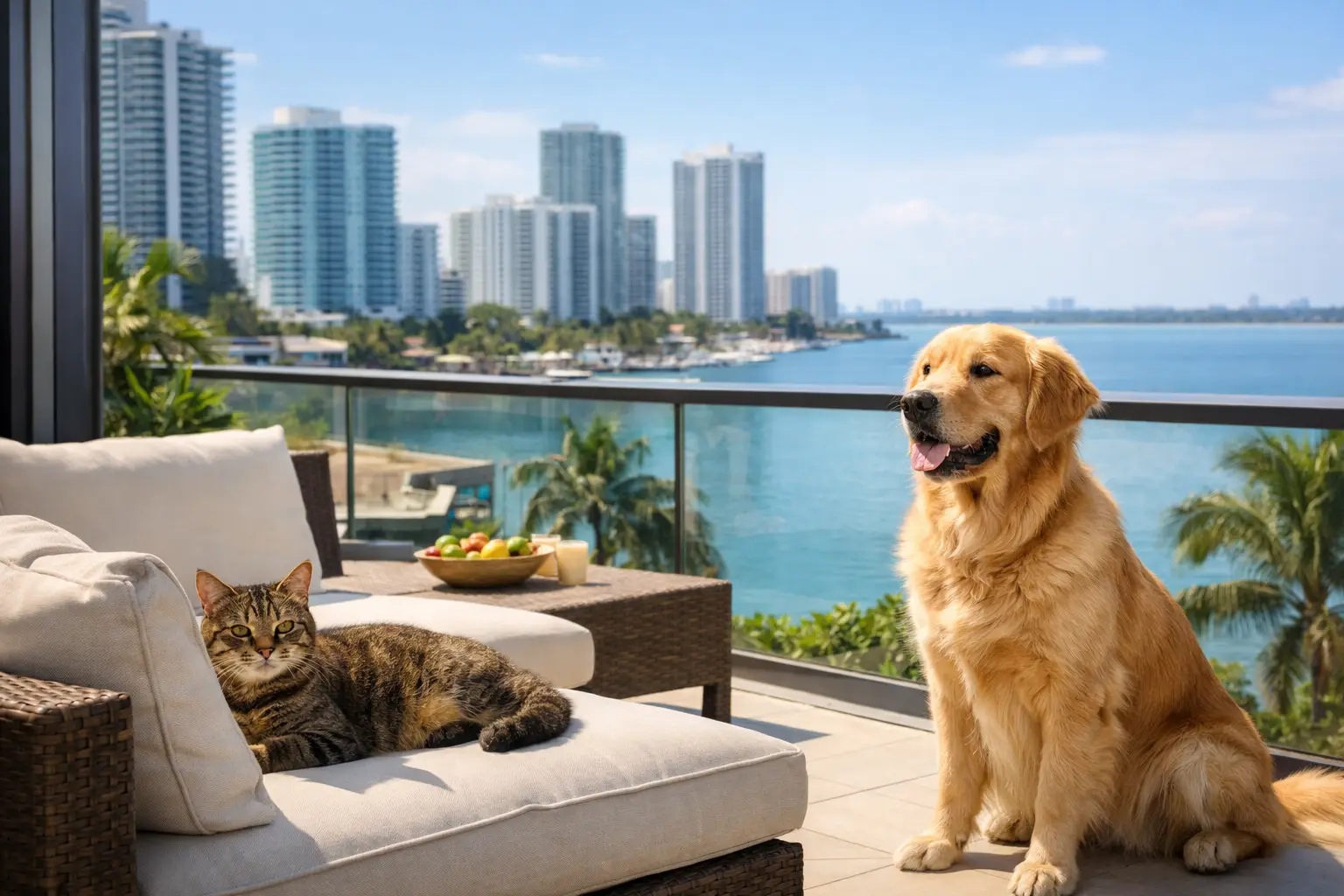
Best Pet Friendly Condos Miami Buyers Should See
A morning walk along Biscayne Bay, a shaded path in Coconut Grove, or a quick elevator ride down to a private dog run can change what condo living feels like with a pet. The best pet friendly condos Miami has to offer are not defined by a lobby pet bowl alone. They combine a workable building policy, thoughtful amenities, nearby outdoor access, and a residence that suits both your lifestyle and long-term real estate goals.
For buyers, renters, and investors, the key is to look beyond a listing’s “pet-friendly” label. In Miami, every condominium association sets its own rules, and those details can affect everything from the dog you bring home to the resale audience for your unit.
What Makes a Miami Condo Truly Pet Friendly?
A building may welcome pets while still placing meaningful limits on size, breed, quantity, registration, or use of common areas. Some associations allow one pet under a specified weight. Others permit larger dogs, multiple pets, or have no weight restriction at all. Policies can also distinguish between owners and tenants, which matters for buyers evaluating a residence as a future rental property.
The strongest pet-friendly condo options tend to make everyday routines easier rather than merely allowing an animal to live in the unit. Look for a dedicated dog park or relief area, pet washing station, accessible outdoor space, and a concierge or management team familiar with pet registration procedures. In a high-rise setting, elevator access, walkability, and the distance from your front door to a suitable outdoor area are practical details that deserve real attention.
Luxury amenities are valuable, but they should not distract from the essentials. A beautifully designed pet spa is a welcome feature. A clearly written pet policy that works for your household is more important.
Best Pet Friendly Condos Miami: Where to Focus Your Search
Miami offers several distinct condo lifestyles, and the right location often depends on your pet’s needs as much as your own. An active dog may benefit from nearby parks, wide sidewalks, and waterfront paths. A smaller pet or a buyer who prefers a lock-and-leave residence may prioritize full-service amenities and convenient access to veterinary care, grooming, and pet supplies.
Brickell and Downtown Miami
Brickell is a natural fit for buyers who want polished high-rise living close to dining, business centers, and bayfront promenades. Many newer luxury towers have recognized that residents expect pet accommodations, so dog runs, pet stations, and dedicated service areas are increasingly common. Still, policies vary widely between buildings, even among nearby towers with similar price points.
Downtown Miami can offer a more urban version of the same convenience, with strong access to parks, waterfront areas, and residential services. This is a compelling choice for professionals who want to keep their commute short without compromising on a refined condo experience. Before moving forward, consider the daily walking route at different times of day. A nearby green space is only useful if the route to reach it feels convenient for your routine.
Edgewater, Midtown, and Wynwood
Edgewater appeals to buyers seeking bay views, modern residences, and a less congested feel than Brickell while remaining close to the city’s core. Its waterfront setting and proximity to Margaret Pace Park make it especially attractive for pet owners who value outdoor time without giving up a full-service condominium lifestyle.
Midtown and Wynwood offer a more neighborhood-oriented rhythm, with walkable blocks, design-forward dining, and a growing mix of residential options. These areas can work well for residents who prefer to have everyday errands, pet services, and outdoor social life close at hand. The trade-off is that each building’s atmosphere can vary considerably, from intimate boutique residences to larger towers with more extensive amenity programs.
Coconut Grove, Coral Gables, and Key Biscayne
For a more residential, greenery-rich setting, Coconut Grove is difficult to overlook. The neighborhood’s tree canopy, parks, waterfront character, and village-style streets suit buyers who want Miami luxury with a quieter, more established feel. Condo inventory can be more selective, but the lifestyle appeal is substantial for households with pets.
Coral Gables offers elegant architecture, landscaped streets, and a more traditional residential environment. It may be particularly appealing to buyers who want close proximity to parks and a refined neighborhood identity. Key Biscayne adds a coastal dimension, with beach access and outdoor recreation that can be exceptional for the right buyer, though association rules and seasonal lifestyle preferences should be reviewed carefully.
Read the Pet Policy Before You Fall in Love With the View
A condominium’s pet policy should be reviewed early, ideally before you invest too much time in a specific unit. Do not rely solely on a listing description or a verbal confirmation that a building is pet friendly. Request the current condominium documents and confirm the rules directly with the association or property management team.
Pay particular attention to the number of pets permitted, weight limits, breed restrictions, pet registration requirements, vaccination documentation, and designated areas for walking or relief. Ask whether there are move-in procedures for pets, elevator rules, leash requirements, or fines for violations. If you are purchasing with plans to rent later, clarify whether tenant pet rules differ from owner rules.
Policies can be amended by an association, so no buyer should assume a rule will remain unchanged forever. What matters is understanding the present policy, the building culture, and whether the residence offers enough flexibility for your foreseeable needs. A buyer with a 20-pound dog has different requirements than a family with two larger dogs, and both should search accordingly.
Amenities That Add Real Value for Pet Owners
When comparing condos, it helps to separate useful pet features from marketing language. A ground-floor dog run can be valuable in a tower where outdoor space is otherwise limited. A wash station can save time after rainy walks or beach outings. On-site staff who know the building’s procedures can also make deliveries, visitors, and everyday living easier.
The surrounding neighborhood deserves equal weight. Access to a waterfront walkway, shaded streets, a nearby park, or a reliable pet care provider can have more impact than an amenity that looks impressive in a brochure. In Miami’s warmer months, shade and walkability are not minor considerations. They shape whether you and your pet will actually enjoy the area every day.
For investors, pet-friendly features may also broaden rental appeal. Many qualified renters have pets and will prioritize buildings where the approval process is clear and the daily experience feels accommodating. That does not automatically make every pet-friendly building the best investment. Rental restrictions, association fees, inventory levels, and the unit’s overall location remain central to the analysis.
Consider the Financial Side of a Pet-Friendly Purchase
Pet ownership can affect the costs and logistics of condo living, even when the association permits animals. Some buildings require a pet deposit, registration fee, or additional documentation. Others may charge fees related to move-ins or enforce fines for policy violations. These expenses are usually modest compared with the purchase price, but they should be understood before closing.
More significantly, buyers should evaluate the association’s financial health, monthly maintenance fees, reserves, insurance requirements, and rules governing leasing. A pet-friendly policy is one part of the decision, not the entire decision. The right condo should also align with your preferred floor plan, views, building services, budget, and holding strategy.
This is especially relevant with pre-construction opportunities. Developers may promote pet amenities, yet the final association documents will govern how the building operates after delivery. Buyers considering new development should review the available disclosures, understand what is confirmed versus conceptual, and plan for the possibility that operating rules evolve as the association takes shape.
A Smarter Way to Tour Pet-Friendly Condos
Touring with a pet owner’s perspective means looking beyond the model unit. Walk from the lobby to the designated pet area. Check whether the route is shaded, secure, and practical. Ask where residents take dogs before work, late at night, and during inclement weather. Notice whether the building’s common spaces feel welcoming to pets or simply tolerant of them.
It is also wise to ask about the unit itself. A large balcony may be appealing, but balcony safety, flooring, noise transfer, and proximity to elevators can affect daily comfort. Lower floors can make walks easier, while higher floors may deliver the views and privacy many buyers want. There is no universal answer – the best choice depends on the household’s rhythm and priorities.
Miami Best Property can help narrow the search by matching your preferred neighborhood, building style, budget, and pet requirements with current opportunities. The goal is not just to find a condo that accepts your pet. It is to find a Miami residence where your daily life, investment criteria, and companion all fit naturally.
The most rewarding condo purchase starts with a clear picture of how you want to live. When a building’s rules, amenities, location, and residence all support that picture, you are far closer to finding a place that feels like home for every member of the household.